3D Printing and Additive Manufacturing Glossary
Complete 3D Printing & Additive Manufacturing Glossary

3D printing and additive manufacturing have transformed how products are designed and produced. This glossary breaks down the essential terms and concepts so professionals and interested readers can quickly get up to speed. We cover processes, materials, post-processing, software and standards, plus common questions you’ll encounter. Read on to understand the practical benefits, typical applications, and what these technologies mean for different industries.
What is Additive Manufacturing? Key Definitions and Concepts
Additive manufacturing builds objects by depositing material layer by layer, rather than removing material as in traditional subtractive methods. That layer-based approach unlocks design freedom and makes complex shapes feasible without elaborate tooling. One of the biggest advantages is rapid prototyping: teams can test concepts faster and at lower cost. Grasping these core ideas is a good first step for anyone working with 3D printing.
How does additive manufacturing differ from traditional fabrication?
Additive manufacturing contrasts with traditional fabrication in several meaningful ways. Instead of cutting or milling away material, it constructs parts from the ground up, which reduces waste and often lowers per-part cost for small runs. It also removes the need for expensive molds and tooling, so design changes can be made quickly and affordably. Those differences make additive methods attractive for prototyping, customization, and low-volume production.
What are the main benefits and applications of 3D printing?

3D printing delivers several practical advantages:
- Faster Iterations : Rapid prototyping shortens development cycles and speeds time-to-market.
- Lower Upfront Cost : Less material waste and no tooling make small runs and custom parts more economical.
- Design Freedom : Complex geometries and part consolidation enable new product possibilities.
Those benefits have driven adoption across aerospace, automotive, healthcare, and consumer goods. For example, healthcare providers use 3D printing for custom prosthetics and dental implants—applications that highlight the technology’s ability to deliver tailored, functional parts.
Which 3D Printing Technologies Should You Know?
Knowing the main printing technologies helps you choose the right process for a project. Each method has distinct mechanics, material options, and trade-offs.
What is Fused Deposition Modeling and how does it work?
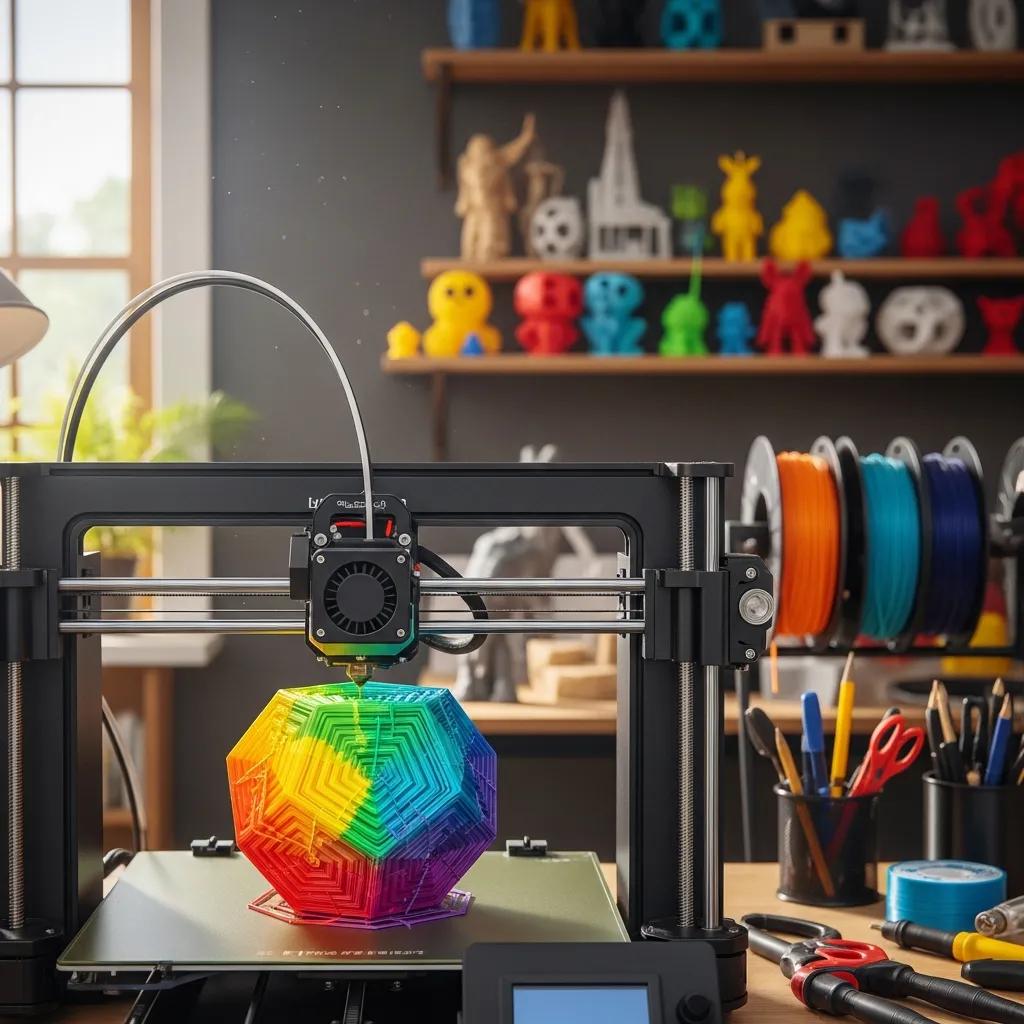
Fused Deposition Modeling (FDM) melts and extrudes thermoplastic filament through a heated nozzle to build parts layer by layer. It’s straightforward, affordable, and widely used by hobbyists and professionals alike. FDM performs well for prototypes and functional components because it supports many material choices and is simple to operate.
How does Selective Laser Sintering differ from Stereolithography?
Selective Laser Sintering (SLS) fuses powdered material—often nylon or other polymers—using a laser to create strong, durable parts. Stereolithography (SLA) uses a UV laser to cure liquid resin into finely detailed layers, producing high-resolution parts with smooth finishes. SLS is typically chosen for functional prototypes and end-use parts; SLA is favored when surface detail and precision are priorities, such as in jewelry or dental models.
What Materials Are Used in Additive Manufacturing?
Material selection directly affects part performance. Additive manufacturing supports polymers, metals, and ceramics, each with different mechanical and thermal properties.
What are common polymers and metals used in 3D printing?
Common polymers include:
- PLA (Polylactic Acid) : A user-friendly, biodegradable filament that prints cleanly for many general-purpose parts.
- ABS (Acrylonitrile Butadiene Styrene) : Tough and impact-resistant, often used for functional components.
- Nylon : Strong and flexible—good for durable, wear-resistant parts.
On the metal side, titanium, aluminum, and stainless steel are common in industrial applications where strength, weight, and durability matter.
How do material properties affect printing outcomes?
Material properties shape every stage of the build. Mechanical strength, melting or curing temperature, and compatibility with the chosen process influence part performance, surface finish, and required equipment. High-temperature materials may need specialized machines; low-melt materials are easier to print but may sacrifice some properties. Choose materials that match the functional and aesthetic goals of your part.
How Does Post-Processing Enhance 3D Printed Parts?

Post-processing turns a printed object into a finished part. The right finishing steps improve strength, appearance, and fit with other components.
What are typical post-processing steps after printing?
Typical post-processing steps include:
- Sanding : Smooths layer lines and prepares the surface for finishing.
- Painting : Adds color, protection, and a uniform appearance.
- Heat Treatment : Alters material properties to increase strength or relieve stress.
These processes help you reach the desired look and mechanical behavior, so plan post-processing into your workflow from the start.
How does quality control ensure fabrication accuracy?
Quality control verifies that parts meet dimensional and material requirements. Methods include dimensional inspection, material testing, and in-process monitoring to catch deviations early. Robust QC reduces defects and ensures parts perform as intended in their final application.
Real-time oversight—continuous monitoring during printing is essential to catch defects early and keep quality consistent across builds.
Real-time Quality Monitoring in 3D Printing
Online monitoring is a key tool for maintaining quality and improving process efficiency. A 3D printing setup can be viewed as an information system with inputs, a state, and outputs. Computer vision techniques are now common for tracking surface quality: detecting defects at various stages—especially during the first layer—lets operators apply corrective measures in time and avoid producing low-quality parts. This approach is effective for real-time quality monitoring of 3D printing.
Quality control monitoring in 3D printing, J Pitel', 2022
What Software and Industry Standards Govern Additive Manufacturing?
Software and standards provide the framework for consistent, repeatable results across machines and materials.
Which software tools are essential for 3D printing workflows?
Essential tools include:
- CAD Software : For creating and editing 3D models with precise control over geometry.
- Slicing Software : Converts models into printer instructions and optimizes toolpaths and settings.
- Simulation Software : Predicts material behavior and potential issues before production.
These tools streamline the workflow and reduce surprises during printing.
What are key additive manufacturing standards and why are they important?
Standards like ISO/ASTM 52900 define terminology and classify additive processes. Following recognized standards helps ensure safety, interoperability, and consistent quality. They also make it easier for manufacturers, suppliers, and customers to communicate requirements and collaborate effectively.
What Are Common FAQs About 3D Printing and Additive Manufacturing Terms?
As more people explore 3D printing, common questions arise about how it works and where it fits. The answers below clarify frequently asked points.
What is rapid prototyping and how is it related to additive manufacturing?
Rapid prototyping uses additive methods to produce physical parts quickly so designers can test form, fit, and function early in development. It leverages layer-based construction to shorten iteration cycles and accelerate product development compared with traditional approaches.
How is metal additive manufacturing evolving in industry applications?
Metal additive manufacturing is advancing rapidly, enabling complex, high-performance parts previously impossible or expensive to make. Sectors like aerospace and automotive use metal 3D printing for lightweight components, custom tooling, and parts consolidation. As processes, materials, and certification practices mature, metal AM will play an increasingly central role in industrial production.
To further explore capabilities and services in this space, consider visiting Just in Time Fabrication , a provider of advanced manufacturing solutions.
For details on specific service areas, Just in Time Fabrication's comprehensive offerings address a range of industry needs.
The integration of additive manufacturing is reshaping many sectors. Visit Advanced manufacturing solutions to learn how companies are using these technologies to innovate and stay competitive.
Frequently Asked Questions
What are the environmental impacts of 3D printing?
3D printing can reduce material waste and support localized production, which lowers transport emissions. On the other hand, some printers consume significant energy and certain materials are not biodegradable. Mitigation strategies include selecting eco-friendlier materials, optimizing prints to use less material, and improving energy efficiency.
How can 3D printing be used in education?
3D printing enhances learning by turning abstract ideas into physical models. Students can experiment with design, engineering, and prototyping, developing practical skills in problem-solving and creativity. Teachers can also produce custom learning aids that align with their curriculum.
What safety precautions should be taken when using 3D printers?
Safety matters. Follow manufacturer instructions, ensure adequate ventilation (some materials emit fumes), and use protective gear like gloves and eye protection when handling hot or sharp parts. Keep the workspace tidy and perform regular maintenance to prevent accidents and equipment failures.
What industries are most impacted by 3D printing technology?
3D printing is changing many fields. Healthcare benefits from custom medical devices; aerospace and automotive use it for lightweight, complex parts; consumer goods companies produce personalized products. Architecture, education, and tooling also see growing use cases as the technology evolves.
What are the limitations of 3D printing?
Limitations include build speed for large volumes, material constraints (not all materials are printable or meet every strength requirement), and the need for post-processing to achieve finished aesthetics. Understanding these limits helps you choose when additive manufacturing is the right tool.
How is 3D printing influencing supply chain management?
3D printing enables on-demand production and reduces inventory needs, letting companies manufacture parts nearer to use and cut transport and lead times. It also supports customization and faster responses to market changes, increasing supply chain flexibility and potentially lowering costs.
Conclusion
Knowing the terminology and core processes of 3D printing and additive manufacturing helps you make better decisions—whether you're prototyping, developing products, or evaluating production options. The speed, cost advantages for low volumes, and design flexibility make these technologies powerful tools across industries. Use this glossary as a starting point, and explore further resources to deepen your understanding and apply additive manufacturing effectively.
