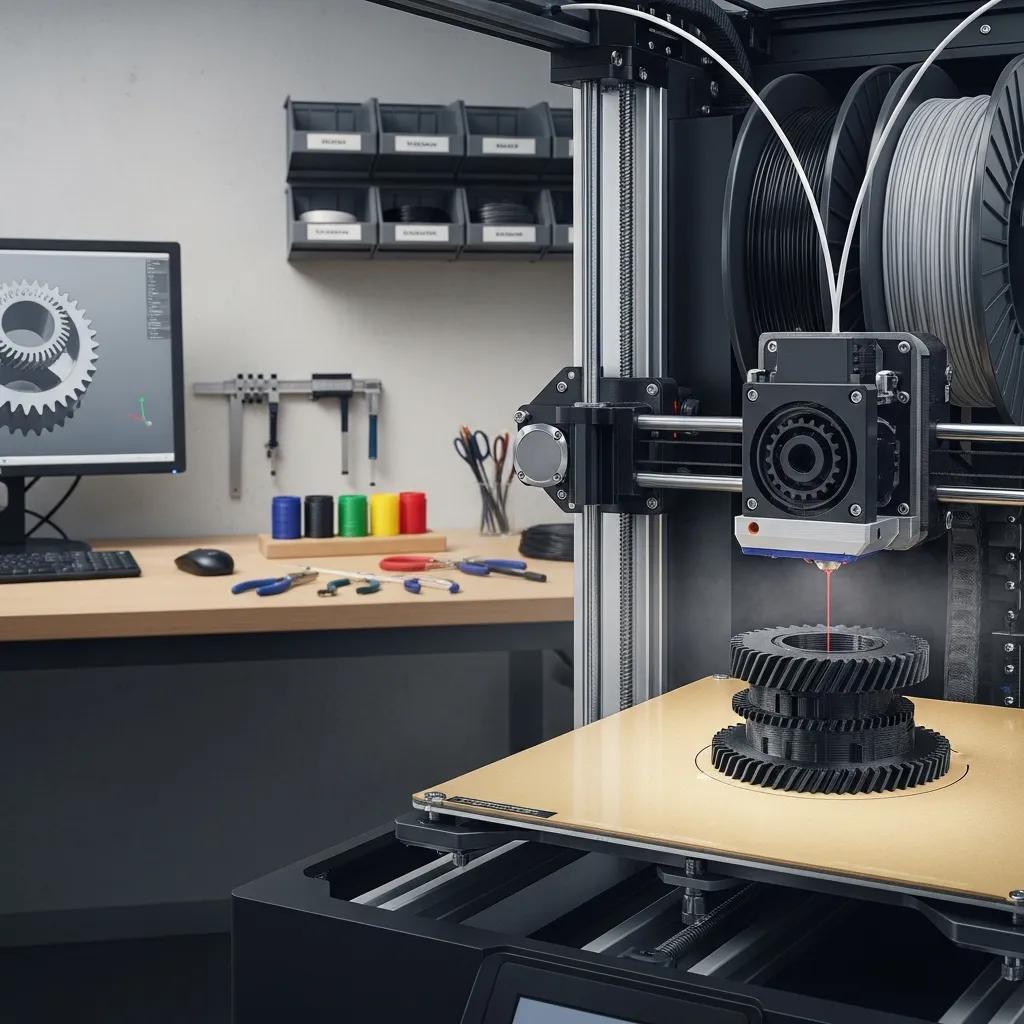
Small-Batch 3D Printing Production: Flexible Manufacturing for Low-Volume Custom Parts
Small-Batch 3D Printing Production: Flexible Manufacturing for Low-Volume Custom Parts

Small-batch 3D printing is revolutionizing the manufacturing landscape by offering a flexible solution for producing low-volume custom parts. This article delves into the key benefits of small-batch 3D printing, the technologies involved, and the materials best suited for this innovative approach. Readers will learn how small-batch production can reduce costs, enhance customization, and support rapid prototyping, making it an ideal choice for businesses and innovators alike. As companies strive for efficiency and adaptability, small-batch 3D printing emerges as a powerful tool to meet these demands. We will explore the advantages of this manufacturing method, the technologies that enable it, and how to get started with custom small-batch 3D printing services.
What Are the Key Benefits of Small-Batch 3D Printing for Low-Volume Production?
Small-batch 3D printing offers several advantages over traditional manufacturing methods, particularly for low-volume production. This approach significantly reduces costs, accelerates production timelines, and enhances customization capabilities. By eliminating the need for expensive tooling and setup, businesses can produce parts on demand, making it a cost-effective solution for prototypes and custom components. Additionally, the speed of production allows for rapid iteration and testing, which is crucial in today’s fast-paced market.
How Does Small-Batch 3D Printing Reduce Costs Compared to Traditional Manufacturing?
Small-batch 3D printing minimizes costs through several mechanisms. First, it eliminates tooling costs associated with traditional manufacturing, which can be prohibitively expensive for low-volume runs. Second, the setup costs are significantly lower, as 3D printing requires minimal preparation compared to conventional methods. This cost efficiency makes small-batch production accessible for startups and small businesses looking to innovate without the financial burden of large-scale manufacturing.
Research further underscores how strategic design in 3D printing can significantly reduce costs and streamline production for small-scale manufacturing.
3D Printing for Small-Scale Production: Design & Cost Reduction
Technology of 3D printing is opening the possibility for small-scale production in quantities between ten and several hundred pieces. The technology of adding material enables the production of complex and integrated functional concepts in a single-pass process, which consequently potentially reduces the need for assembly operations. Design approaches and manufacturing processing are not mastered well because of a constant stream of new materials and manufacturing options. Well-designed products need to consider attributes of 3D printing as early as the conceptual phase. The cost of the product can be reduced with a systematic research and considering principles for small-scale production.
Methods and principles of product design for small-scale production based on 3D printing, J Tavčar, 2019
Why Is Rapid Prototyping Essential for Agile Product Development?
Rapid prototyping is a cornerstone of agile product development, allowing teams to quickly iterate on designs and test concepts. With small-batch 3D printing, companies can produce prototypes in a fraction of the time it would take using traditional methods. This speed enables faster feedback loops, allowing designers to refine their products based on real-world testing. As a result, businesses can bring their products to market more quickly, gaining a competitive edge in their respective industries.
Which 3D Printing Technologies Are Best Suited for Small-Batch Production?

Several 3D printing technologies are particularly well-suited for small-batch production, each offering unique advantages. Fused Deposition Modeling (FDM), Stereolithography (SLA), and Selective Laser Sintering (SLS) are among the most popular methods used in this context. Understanding the strengths and weaknesses of each technology is essential for selecting the right approach for specific applications.
What Are the Advantages of FDM, SLA, and SLS in Low-Volume Manufacturing?
FDM is known for its affordability and ease of use, making it a popular choice for prototyping and low-volume production. SLA offers high-resolution prints with smooth finishes, ideal for detailed prototypes. SLS, on the other hand, excels in producing functional parts with complex geometries, making it suitable for end-use applications. Each technology has its unique strengths, allowing businesses to choose the best fit for their specific needs.
How Do Different Technologies Impact Part Quality and Functionality?
The choice of 3D printing technology directly impacts the quality and functionality of the final product. FDM prints may exhibit layer lines and require post-processing for a smooth finish, while SLA prints are typically more precise and visually appealing. SLS parts are known for their strength and durability, making them suitable for functional applications. Understanding these differences helps businesses make informed decisions about which technology to use for their small-batch production needs.
What Materials Are Ideal for Custom 3D Printing in Small Batches?

Selecting the right materials is crucial for achieving the desired properties and performance in 3D printed parts. Common materials used in small-batch 3D printing include PLA, PETG, ABS, and various resins. Each material has distinct characteristics that make it suitable for specific applications, and understanding these properties is essential for effective material selection.
Specifically, FDM technology leverages affordable polymer materials like PLA, PETG, and ABS, making it a widely adopted method for various industrial applications.
FDM 3D Printing: Affordable Polymer Materials for Engineering
Among the additive manufacturing technologies, the Fused Filament Fabrication (FFF) method is the most widely used method worldwide due to its affordability and broad application area. FFF is a method in which part formation is achieved by depositing melted materials on each other. In recent years, polymer materials such as polylactic acid (PLA), polyethylene terephthalate glycol (PETG), and acrylonitrile butadiene styrene (ABS) have been frequently used in many industrial areas in the FFF method because they are lightweight, inexpensive, sustainable, and provide sufficient strength for engineering applications.
Experimental analysis of the effects of different production directions on the mechanical characteristics of ABS, PLA, and PETG materials produced by FDM, 2024
What Are the Properties and Applications of PLA, PETG, ABS, and Resin?
This table highlights the diverse properties and applications of common 3D printing materials, showcasing their suitability for various projects. Choosing the right material can significantly impact the performance and longevity of the final product.
| Material | Properties | Applications |
|---|---|---|
| PLA | Biodegradable, easy to print | Prototyping, educational models |
| PETG | Strong, impact-resistant, chemical resistant | Functional parts, containers |
| ABS | Durable, heat-resistant, impact-resistant | Automotive parts, housings |
| Resin | High detail, smooth finish, brittle | Jewelry, dental applications |
How to Choose the Right Material for Your Low-Volume 3D Printed Parts?
When selecting materials for small-batch 3D printing, several factors should be considered. First, assess the mechanical properties required for the application, such as strength, flexibility, and heat resistance. Second, consider the printing technology being used, as some materials are better suited for specific methods. Lastly, evaluate the cost and availability of materials to ensure they align with project budgets and timelines. Avoiding common mistakes, such as choosing a material without understanding its properties, is crucial for successful outcomes.
How Does Flexible Manufacturing Enhance Custom 3D Printing Services?
Flexible manufacturing plays a vital role in enhancing custom 3D printing services by allowing for rapid adjustments and adaptations to production processes. This approach enables manufacturers to respond quickly to changing customer demands and market conditions, making it an essential component of modern manufacturing strategies.
What Is Flexible Manufacturing in the Context of Additive Manufacturing?
Flexible manufacturing refers to the ability to quickly adapt production processes to accommodate different products or changes in demand. In the context of additive manufacturing, this means being able to switch between different designs and materials with minimal downtime. This adaptability is particularly beneficial for businesses that require custom solutions and rapid turnaround times.
How Does On-Demand 3D Printing Support Customization and Fast Turnaround?
On-demand 3D printing supports customization by allowing businesses to produce parts tailored to specific customer requirements without the need for extensive retooling. This capability not only speeds up production but also enhances customer satisfaction by providing unique solutions. As a result, companies can maintain a competitive edge by offering personalized products that meet the evolving needs of their clients.
Who Benefits Most from Small-Batch 3D Printing Production?
Small-batch 3D printing production is particularly advantageous for startups, innovators, and businesses looking to streamline their manufacturing processes. This method allows for rapid prototyping and customization, making it an ideal choice for those seeking to bring new ideas to market quickly.
How Do Startups and Innovators Leverage Low-Volume 3D Printing?
Startups and innovators often leverage low-volume 3D printing to test new concepts and gather feedback without the financial burden of traditional manufacturing. This approach enables them to iterate on designs quickly, reducing time to market and increasing the likelihood of success. By utilizing small-batch production, these companies can focus on innovation and creativity rather than being constrained by manufacturing limitations.
What Are the Advantages for Businesses and Hobbyists Using Custom 3D Printing?
Businesses and hobbyists alike benefit from the customization capabilities of small-batch 3D printing. For businesses, this means the ability to create tailored products that meet specific customer needs, enhancing brand loyalty and satisfaction. Hobbyists can explore their creativity by producing unique items that reflect their personal style. The flexibility and accessibility of small-batch 3D printing empower both groups to achieve their goals without the constraints of traditional manufacturing.
How to Get Started with Custom Small-Batch 3D Printing Services?
Getting started with custom small-batch 3D printing services involves understanding the process and requirements for successful production. This section outlines the essential steps to initiate your small-batch printing journey.
What 3D Model File Types Are Accepted for Small-Batch Production?
When preparing for small-batch 3D printing, it is crucial to use compatible file types. Commonly accepted formats include STL, OBJ, and AMF. These file types ensure that the 3D models can be accurately interpreted by the printing software, leading to successful prints. Ensuring high-quality files is essential for achieving the best results in your production.
Understanding the scope of services is also important. For businesses looking to partner with a provider, it's beneficial to know the specific areas we serve to ensure local or specialized support.
How Does Just-in-Time Fabrication Support Design Optimization and Ordering?
Just-in-Time Fabrication specializes in providing custom 3D printing services that emphasize design optimization and efficient ordering processes. By working closely with clients, they help refine designs to ensure optimal performance and manufacturability. This collaborative approach not only streamlines the production process but also enhances the overall quality of the final products, making Just-in-Time Fabrication a valuable partner for businesses seeking to leverage small-batch 3D printing.
