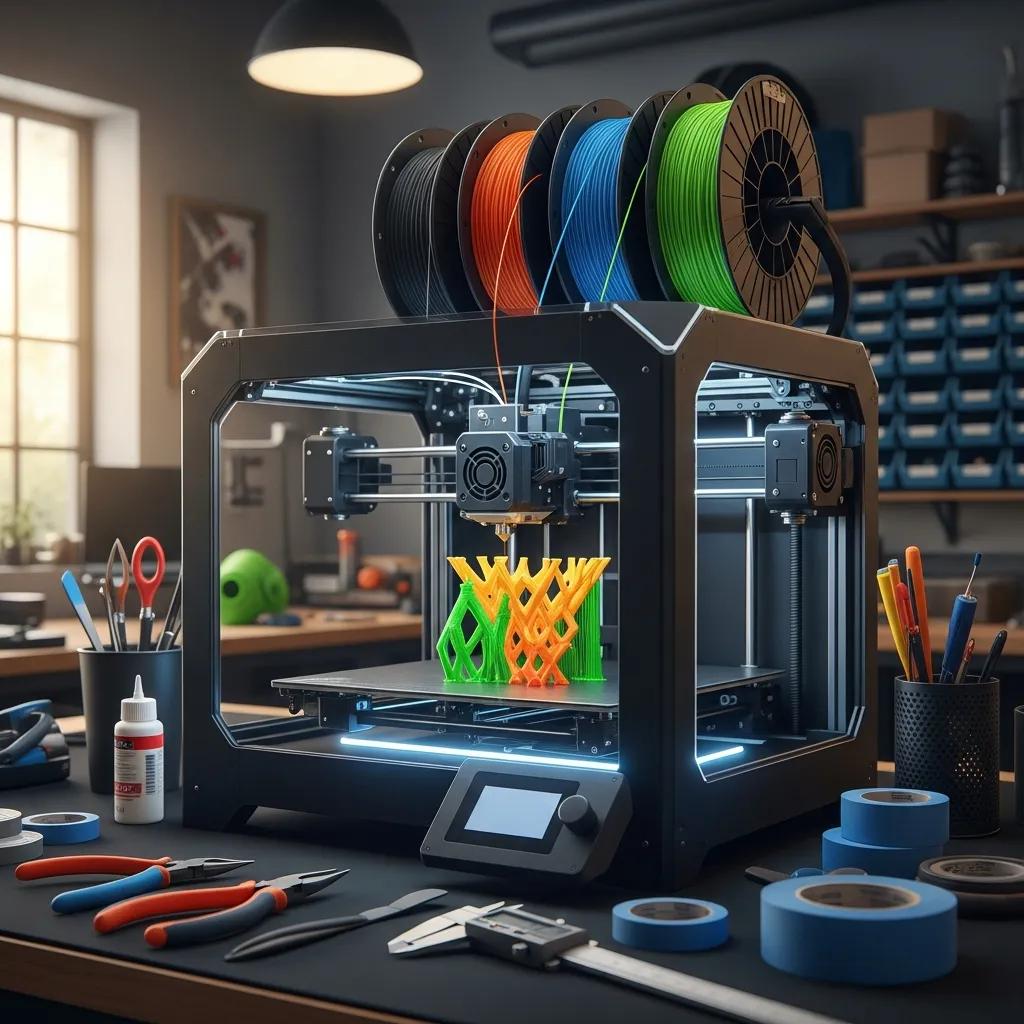
Frisco TX 3D Printing and Prototyping Services
Custom 3D Printing & Prototyping in Frisco, TX — Fast, Precise Additive Manufacturing

3D printing is reshaping how products get designed and built in Frisco, TX. This guide breaks down local 3D printing and prototyping options—what technologies and materials are available, how rapid prototyping shortens development cycles, and which cost factors to watch. Whether you’re a designer, engineer, or product manager, you’ll find practical information to help you choose the right process and prepare parts for efficient printing.
What 3D printing technologies power Frisco’s prototyping scene?
Frisco hosts a range of production-ready 3D printing methods that serve different prototyping needs. The most common are Fused Deposition Modeling (FDM), Stereolithography (SLA), and Selective Laser Sintering (SLS). Each method has distinct strengths, so the right choice depends on the part’s function, finish, and complexity.
How do FDM, SLA, and SLS compare for prototyping?
FDM is cost-effective and straightforward: it extrudes thermoplastic filament layer by layer and is great for quick functional prototypes. SLA uses a laser to cure liquid resin into parts, delivering fine detail and smooth surfaces—ideal for visual models and small, intricate components. SLS fuses powdered materials with a laser, enabling robust parts and complex geometries without support structures. Pick the process based on precision needs, mechanical requirements, and surface finish expectations.
Which materials are available for custom 3D printing in Frisco?

Material choice directly affects strength, flexibility, and appearance. Common options include:
- PLA (Polylactic Acid): A plant-based thermoplastic that prints easily and gives a clean surface—great for concept models and low-stress parts.
- ABS (Acrylonitrile Butadiene Styrene): Tough and impact resistant, suitable for functional prototypes that need to withstand wear.
- PETG (Polyethylene Terephthalate Glycol): Combines durability with chemical resistance—useful for parts that need toughness and slight flexibility.
- Nylon: Strong, somewhat flexible, and wear-resistant—ideal for durable, load-bearing components.
- Resin: Used in SLA printing for high-detail parts and very smooth finishes, perfect for detailed assemblies and presentation models.
Match material properties to your part’s mechanical and aesthetic requirements for best results.
How does rapid prototyping speed product development in Frisco?
Rapid prototyping shortens the design loop: you can test, refine, and validate parts in days instead of weeks. That faster iteration cycle reduces time to market, helps resolve design issues early, and lets teams respond quickly to customer feedback.
What are typical turnaround times for local prototype fabrication?
Turnaround depends on process and part size. Expect FDM parts in roughly 24–48 hours for standard jobs. SLA and SLS runs commonly fall in the 2–5 day range, depending on complexity and finishing needs. If a deadline is tight, many providers offer expedited options to meet urgent schedules.
How does additive manufacturing support custom fabrication needs?
Additive manufacturing excels at producing complex geometries and one-off parts without costly tooling. That makes customization more affordable and practical—on-demand production reduces inventory and material waste while enabling tailored solutions for specific applications.
What are the cost factors for 3D printing services in Frisco, TX?
Several elements influence price: material choice, part size and geometry, required surface finish, post-processing, and lead time. Understanding these factors helps you budget and compare quotes more effectively.
How is pricing determined for different materials and technologies?
Costs vary by process and material. FDM is usually the most economical because of lower material and machine costs; SLA and SLS tend to be pricier due to materials and processing. As a rough guide, prototype pricing can range from about $50 up to $500, depending on size and complexity—your exact quote will reflect material, machine time, and any finishing work.
Transparent, standardized pricing helps service providers compete fairly and gives clients confidence in their estimates.
Cost Analytics for 3D Printing Services
This study provides cost analysis tools to help service bureaus adopt objective pricing instead of ad hoc rates.
Network-based pricing for 3
D printing services in two-sided manufacturing-as-a-service marketplace, D Pahwa, 2020
What should businesses expect regarding cost transparency and estimates?
Reputable providers supply itemized estimates that separate material, machine time, labor, and finishing. Ask for breakdowns and turnaround options up front—clear communication prevents surprises and makes it easier to compare vendors.
Which industries benefit most from Frisco’s 3D printing and prototyping services?

3D printing serves many sectors. The most active in Frisco include automotive, aerospace, medical, and consumer products, where rapid iteration and part customization provide clear advantages.
How are automotive and aerospace sectors using local additive manufacturing?
Automotive and aerospace teams use additive manufacturing for rapid prototyping, jigs and fixtures, and even end-use components in low-volume runs. The ability to test fit, form, and function quickly is invaluable where safety and performance standards are critical.
What are examples of medical and industrial prototyping projects in Frisco?
Medical projects often include patient-specific implants, surgical guides, and prosthetics tailored to individual anatomy. Industrial applications cover custom tooling, specialized fixtures, and replacement parts that streamline production—showing how 3D printing improves both clinical outcomes and factory efficiency.
How can you prepare your files for efficient 3D printing in Frisco?
Clean, well-prepared files reduce errors and speed production. The right format and careful checks make a big difference in print quality and lead time.
What file formats and specifications are required for prototype fabrication?
Common accepted formats are STL, OBJ, and AMF. Before submission, verify model scale, wall thicknesses, and watertight geometry, and run error checks to catch non-manifold edges or inverted normals—these fixes avoid printing delays.
How does Just In Time Fabrication ensure quality and precision?
Just In Time Fabrication combines experienced engineering oversight with documented QA procedures—material selection guidance, dimensional checks, and controlled post-processing—to deliver reliable prototypes that meet specified tolerances.
Where can you find case studies and testimonials for Frisco 3D printing services?
Case studies and client testimonials are valuable for judging a provider’s track record—look for projects similar to your needs and for reviewers who describe timelines, costs, and performance.
What local projects showcase successful rapid prototyping outcomes?
Local examples include automotive suppliers that used 3D printing to launch new custom part lines faster and with fewer iterations, cutting their time to market significantly. These real-world results demonstrate how additive workflows accelerate development.
How do client reviews reflect service quality and turnaround?
Customer feedback often highlights responsiveness, dimensional accuracy, and reliable lead times. Positive reviews typically point to clear communication and consistent results—two signs of a dependable partner.
To learn more about practical services and capabilities, explore the "services" offered by specialized providers.
For broader regional support and resources, Just In Time Fabrication maintains helpful guides and service information.
In short, pairing the right technology with experienced partners is key to getting prototypes that deliver. To discuss how Just In Time Fabrication can support your next project, request a consultation.
Frequently Asked Questions
What are the environmental impacts of 3D printing materials?
Environmental effects vary by material and process. PLA is compostable under industrial conditions and comes from renewable sources, making it a greener choice for non-structural parts. Petroleum-based plastics like ABS and some resins have higher environmental costs, so consider recyclability, remanufacturing options, and the energy use of production when choosing materials.
How can businesses ensure the quality of their 3D printed prototypes?
Quality depends on matching material and process to part requirements, preparing error-free files, and following manufacturer-recommended print settings. Regular machine maintenance, in-process inspections, and post-print validation (fit checks, dimensional measurement, and functional testing) also help deliver consistent results.
What are the limitations of 3D printing technology?
Limitations include maximum build volume for most printers, material constraints for high-stress or high-temperature applications, and slower per-part speed for very large production runs. Surface finish and mechanical anisotropy (directional strength differences) are also considerations—understanding these limits helps you choose when additive manufacturing is the right tool.
Can 3D printing be used for mass production?
3D printing excels at prototyping and low- to mid-volume production; however, newer methods like multi-jet fusion and CLIP are narrowing the gap for higher-volume use cases—especially when customization or complex geometries are required. Evaluate cost per part, lead time, and design freedom to determine if additive is the best route for your scale.
What industries are emerging as new adopters of 3D printing technology?
Emerging adopters include fashion (custom accessories and avant-garde garments), food (intricate confectionery and personalized nutrition prototypes), and construction (printed components and formwork). These sectors show how additive manufacturing enables novel designs and tailored solutions beyond traditional manufacturing limits.
How can businesses stay updated on advancements in 3D printing technology?
Stay current by subscribing to industry journals, attending trade shows and webinars, joining professional associations, and participating in online forums. Following manufacturers and thought leaders on social media also helps you spot new materials and process improvements as they emerge.
Conclusion
Custom 3D printing and prototyping in Frisco, TX, give teams the flexibility to iterate quickly and produce parts that meet precise requirements. By choosing the right technology and materials—and by partnering with experienced providers—you can reduce time to market and control costs. If you’re ready to explore how these services can accelerate your project, reach out to a local provider for a consultation.
