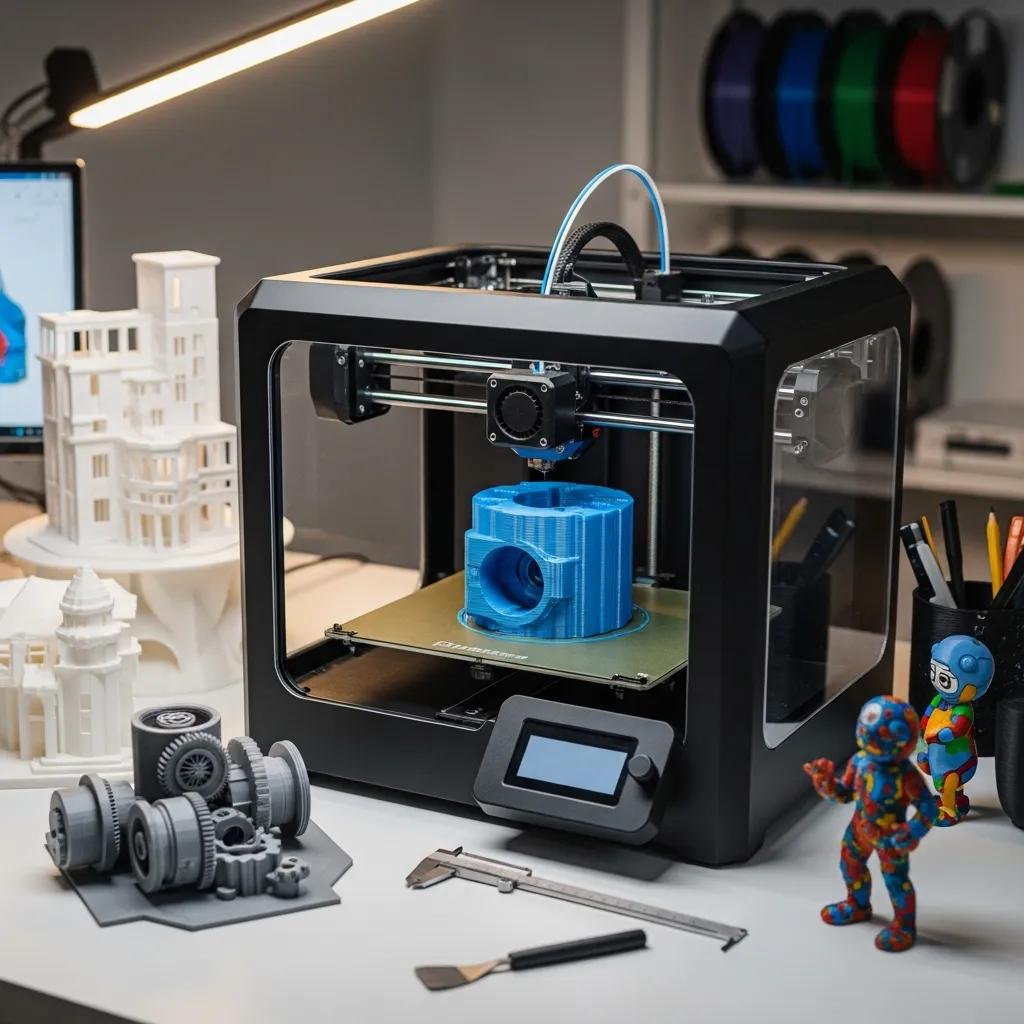
Custom 3D Printing Services: Professional Prototyping, Parts & Production Solutions
Custom 3D Printing Services: Professional Prototyping, Parts & Production Solutions for On-Demand Manufacturing
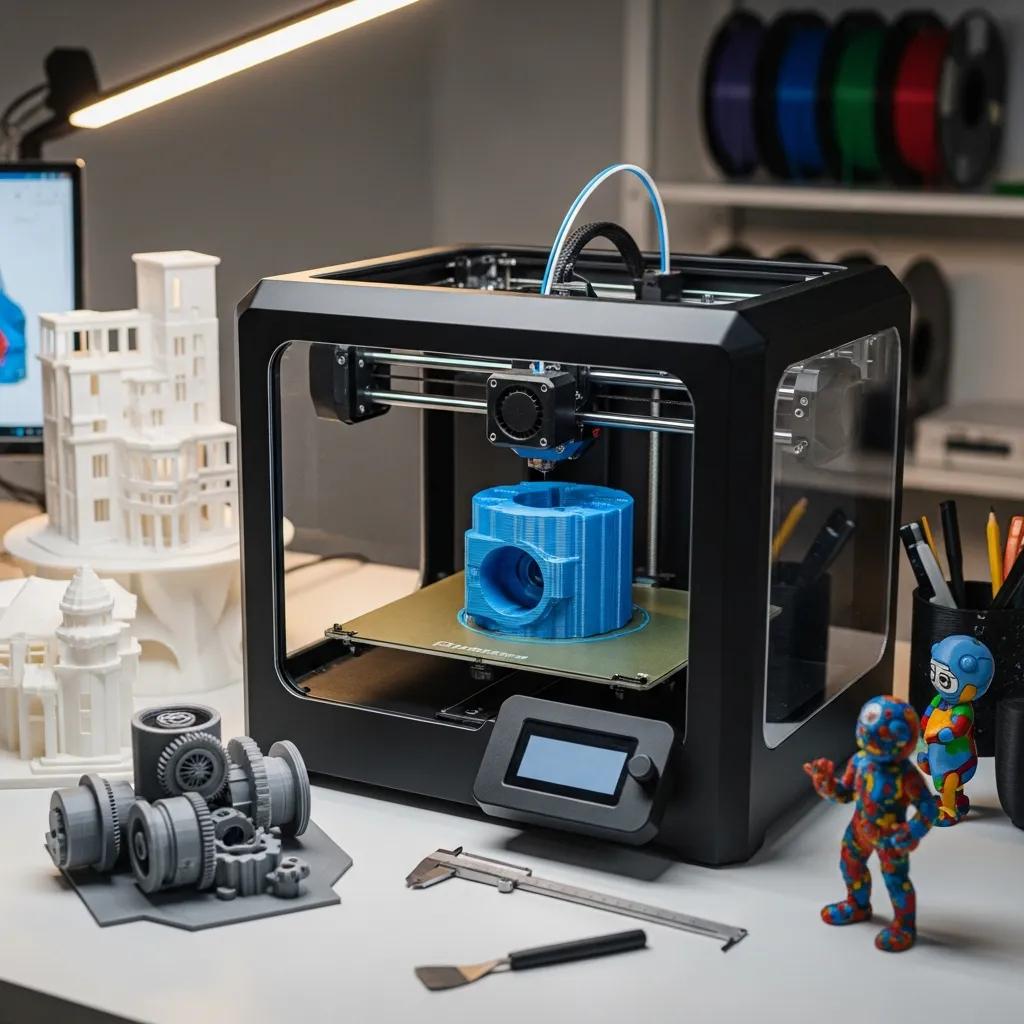
Custom 3D printing services have revolutionized the manufacturing landscape, offering unparalleled flexibility and efficiency in producing prototypes, custom parts, and small-batch production runs. This article delves into the intricacies of these services, highlighting their benefits, technologies, and applications. Readers will gain insights into how professional prototyping can accelerate product development and the advantages of on-demand manufacturing. Many businesses face challenges in traditional manufacturing processes, such as high costs and long lead times. Custom 3D printing presents a solution by enabling rapid iteration and cost-effective production. We will explore the various 3D printing technologies and materials, the precision and speed offered by Just-in-Time Fabrication, and how customers can easily request quotes and design support.
Indeed, the transformative power of additive manufacturing is widely recognized for its ability to enable complex designs and cost-effective customization.
3D Printing: Disruptive Technology for Customization
Additive manufacturing (AM) has rapidly emerged as a disruptive technology to build mechanical parts, enabling increased design complexity, low-cost customization and an ever-increasing range of materials.
Expert-guided optimization for 3
D printing of soft and liquid materials, S Abdollahi, 2018
What Are Custom 3D Printing Services and Their Key Benefits?
Custom 3D printing services encompass a range of additive manufacturing techniques that create three-dimensional objects from digital files. These services provide significant advantages, including reduced production costs, faster turnaround times, and the ability to produce complex geometries that traditional manufacturing methods often cannot achieve. Businesses and individuals can leverage these benefits to enhance their product development processes and bring innovative designs to market more efficiently.
How Does Professional Prototyping Accelerate Product Development?
Professional prototyping plays a crucial role in speeding up product development by allowing designers to create tangible models of their concepts quickly. This iterative process enables teams to test and refine their designs based on real-world feedback. For instance, a startup may utilize rapid prototyping to develop a new gadget, iterating on the design based on user testing and market research. The ability to produce prototypes in days rather than weeks significantly shortens the time to market, giving businesses a competitive edge.
This emphasis on rapid iteration aligns with the core objectives of prototyping, which aims to accelerate and optimize the entire product development lifecycle.
Rapid Prototyping for Accelerated Product Development
The main objective of prototypes is the acceleration and optimization of the product development process, the improvement of product quality and the use of quality management methods.
Enhanced rapid prototyping for faster product development processes, 1997
What Advantages Do On-Demand 3D Printing and Small-Batch Production Offer?
On-demand 3D printing and small-batch production offer several key advantages, including cost savings and manufacturing flexibility. By producing only what is needed, businesses can minimize waste and reduce inventory costs. For example, a company may require a limited number of custom parts for a specific project, which can be produced on-demand without the need for large-scale manufacturing setups. This approach is particularly beneficial for startups and small businesses that may not have the resources for mass production.
The flexibility and efficiency of on-demand production are further underscored by its role in empowering both industrial and individual users to create custom goods.
On-Demand 3D Printing for Custom Production
Additive manufacturing (AM), also known as 3D printing, has been called a disruptive technology as it enables the direct production of physical objects from digital designs and allows private and industrial users to design and produce their own goods enhancing the idea of the rise of the “prosumer”.
A dynamic order acceptance and scheduling approach for additive manufacturing on-demand production, D Zhang, 2019
Which 3D Printing Technologies and Materials Does Just-in-Time Fabrication Use?

Just-in-Time Fabrication employs various 3D printing technologies and materials to meet diverse customer needs. These technologies include Fused Deposition Modeling (FDM), Stereolithography (SLA), and Selective Laser Sintering (SLS), each offering unique advantages for different applications. Understanding the materials used in these processes is essential for selecting the right solution for specific projects.
What Are the Properties and Applications of PLA, PETG, ABS, and Resin?
Different materials used in 3D printing possess distinct properties that make them suitable for various applications. The following table summarizes the characteristics and typical uses of some common 3D printing materials:
| Material | Properties | Applications |
|---|---|---|
| PLA | Biodegradable under industrial composting conditions, easy to print | Prototyping, educational models |
| PETG | Strong, impact-resistant, chemically resistant | Functional parts, containers |
| ABS | Durable, heat-resistant, prone to warping | Automotive parts, toys |
| Resin | High detail, smooth finish, brittle compared to thermoplastics | Jewelry, dental models |
How Do Accepted File Types Like STL, OBJ, and STEP Support Custom Fabrication?
Accepted file types such as STL, OBJ, and STEP are crucial for custom fabrication as they define the geometry of the 3D models to be printed. Each format has its strengths: STL is widely used for its simplicity and compatibility, OBJ supports color and texture information, while STEP files are ideal for complex assemblies and CAD interoperability. Understanding these file types helps ensure that designs are accurately translated into physical objects, maintaining the integrity of the original concept.
How Does Just-in-Time Fabrication Ensure Precision and Fast Turnaround?
Just-in-Time Fabrication is committed to delivering precision and speed in its 3D printing services. The company employs advanced technologies and quality control measures to ensure that every print meets stringent specifications. This focus on quality not only enhances the final product but also reduces the likelihood of costly errors during production.
What Is the Step-by-Step Process for Custom 3D Printing Projects?

The process for custom 3D printing projects typically involves several key steps:
- Initial Consultation: Discuss project requirements and objectives with the client.
- Design and Prototyping: Create and refine the 3D model based on client feedback.
- Production: Utilize the selected 3D printing technology to manufacture the final product.
- Quality Assurance: Conduct thorough inspections to ensure precision and quality.
- Delivery: Ship the completed parts to the client.
How Does Engineering Expertise Optimize Print Strength and Accuracy?
Engineering expertise is vital in optimizing print strength and accuracy. Skilled engineers analyze the design and material properties to enhance the structural integrity of the printed parts. Techniques such as adjusting print settings, optimizing part orientation, and selecting appropriate materials can significantly impact the final product's performance. For example, using reinforced materials or composite filaments can improve the durability of parts used in demanding applications, ensuring they meet the required standards.
What Industries and Applications Benefit from Custom 3D Printing Solutions?
Custom 3D printing solutions are applicable across various industries, providing innovative solutions to unique challenges. From aerospace to healthcare, businesses are leveraging these technologies to enhance their operations and product offerings.
How Do Startups and Hobbyists Use Rapid Prototyping Services?
Startups and hobbyists often utilize rapid prototyping services to bring their ideas to life quickly. For instance, a hobbyist may create a custom drone design, using 3D printing to test different configurations and features. This flexibility allows for experimentation and innovation without the high costs associated with traditional manufacturing methods.
What Are Examples of Custom Parts and Small-Batch Production Use Cases?
Custom parts and small-batch production are increasingly popular in various sectors. Examples include:
- Medical Devices: Custom surgical tools tailored to specific procedures.
- Automotive Components: Small-batch production of specialized parts for performance vehicles.
- Consumer Products: Unique designs for limited-edition items, such as custom phone cases.
How Can Customers Request Quotes and Access Design Support Services?
Customers can easily request quotes and access design support services through Just-in-Time Fabrication. The process is designed to be straightforward and user-friendly, ensuring that clients receive the assistance they need promptly.
What Is the Process to Get a Custom 3D Print Quote?
To obtain a custom 3D print quote, customers typically follow these steps:
- Submit Project Details: Provide information about the project, including specifications and desired materials.
- Receive Initial Quote: Get a preliminary estimate based on the provided details.
- Finalize Design: Work with the design team to refine the project scope and specifications.
- Confirm Order: Approve the final quote and proceed with production.
This streamlined process ensures that clients can quickly move from concept to production.
How Does 3D Design and Optimization Support Improve Print Outcomes?
3D design and optimization support play a crucial role in enhancing print outcomes. By utilizing advanced design software and techniques, Just-in-Time Fabrication can help clients create models that are not only aesthetically pleasing but also structurally sound. This optimization process can lead to improved performance and reduced material waste, ultimately benefiting the client’s bottom line.
What Are Common Questions About Custom 3D Printing Services?
As custom 3D printing services gain popularity, several common questions arise regarding their capabilities and processes. Addressing these queries helps potential clients understand the value of these services.
What File Types and Materials Are Accepted for 3D Printing?
Just-in-Time Fabrication accepts a variety of file types and materials to accommodate diverse project needs. Commonly accepted file types include STL, OBJ, and STEP, while materials range from PLA and ABS to specialized resins. This flexibility allows clients to choose the best options for their specific applications.
How Long Does It Take to Receive Custom 3D Printed Parts?
The turnaround time for custom 3D printed parts varies based on the complexity of the project and the selected materials. Generally, clients can expect to receive their parts within a few days to a couple of weeks after finalizing the design and confirming the order. Factors such as print volume and post-processing requirements can influence the timeline, but Just-in-Time Fabrication strives to deliver products as quickly as possible.
