
Rapid Iterative Prototyping Services
Rapid Iterative Prototyping Services: How Agile Product Development Accelerates Custom 3D Fabrication

Rapid iterative prototyping transforms how products are developed by prioritizing speed and adaptability. It lets teams build, test, and refine models quickly so design decisions happen earlier and with more confidence. In custom 3D fabrication, this approach supports agile product development—helping organizations react to market shifts and real user feedback without losing momentum. Below we explain what rapid iterative prototyping is, which technologies and materials enable it, how iteration works, typical pricing considerations, and real-world examples that show the impact.
What is Rapid Iterative Prototyping and Why Does It Matter?
Rapid iterative prototyping is a workflow centered on making fast, testable versions of a product and improving them in short cycles. It’s a core practice in agile development because it reduces uncertainty, speeds up learning, and increases the chance of shipping something users actually want. By iterating frequently, teams catch problems early and make better-informed choices throughout the project.
Defining Rapid Iterative Prototyping in Agile Product Development
Within an agile framework, rapid iterative prototyping means producing multiple product versions in quick succession. Teams use those versions to validate assumptions, compare layouts or features, and decide what to keep or discard. Methods like Scrum and Kanban encourage the collaboration and continuous feedback that make these short cycles effective. The result is faster learning, clearer priorities, and a higher likelihood of delivering a successful product.
Used strategically inside agile teams, prototyping reduces risk and surfaces crucial feedback early in the development lifecycle.
Agile Prototyping for Physical Product Development
In physical product work, prototyping is essential to lower uncertainty and validate assumptions with customers and stakeholders. When embedded in an agile process, it guides which kind of prototype to build at each stage so teams focus on the right questions at the right time.
Target-oriented prototyping in highly iterative product development, 2016
How Rapid Prototyping Enhances Product Development Speed
Speed is a primary benefit of rapid prototyping. Advanced 3D printing tools let teams move from CAD to a tangible part in hours or days instead of weeks. That shorter feedback loop means faster validation of design choices, fewer late-stage surprises, and a measurable reduction in time-to-market—an advantage that often translates directly to competitive gains.
Which 3D Printing Technologies Enable Fast Prototyping Services?
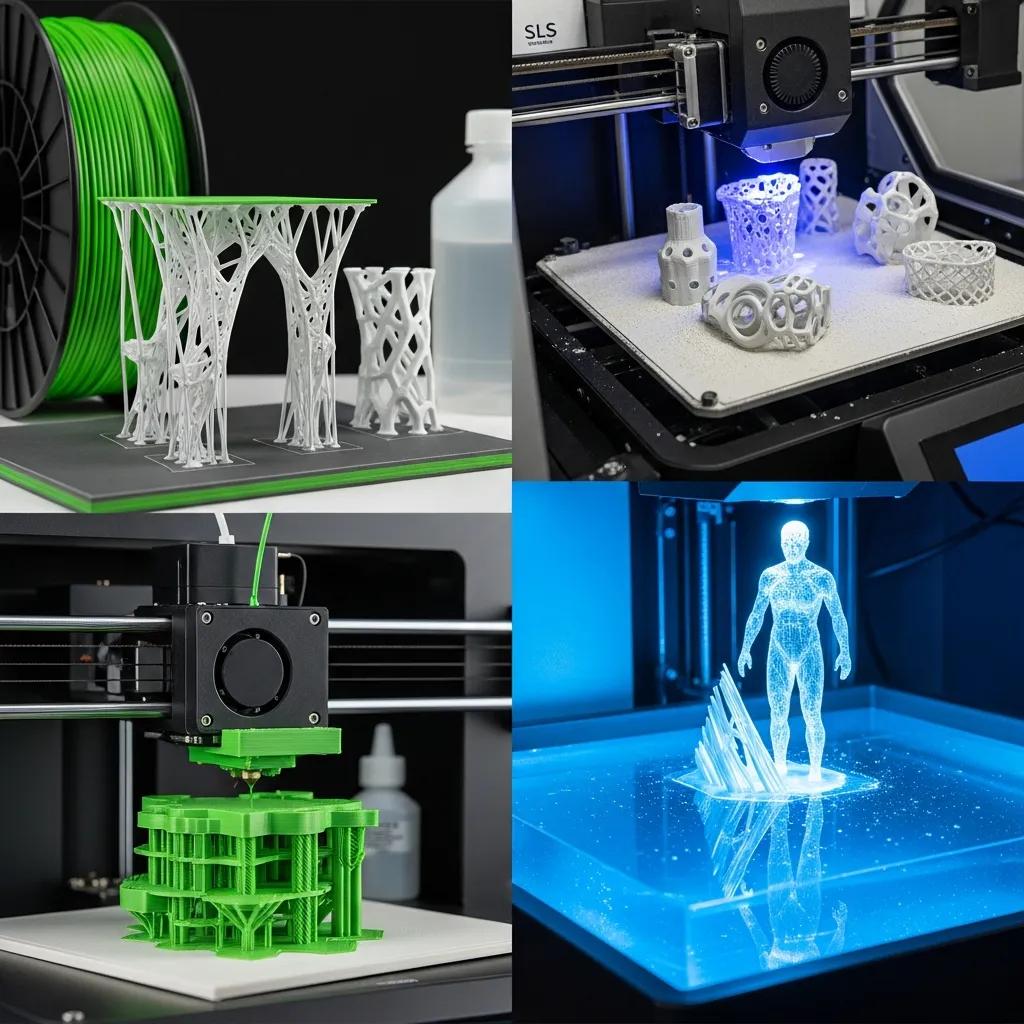
A range of additive manufacturing technologies supports rapid prototyping, and each serves different needs. Choosing the right one depends on the part’s purpose—visual review, functional testing, or final-fit validation.
Overview of Additive Manufacturing Methods for Prototyping
This table summarizes the key additive manufacturing techniques used in rapid prototyping, highlighting their unique strengths and applications. Understanding these methods can help teams select the most suitable technology for their prototyping needs.
| 3D Printing Method | Material Type | Key Strengths | Ideal Use Cases |
|---|---|---|---|
| Fused Deposition Modeling (FDM) | Thermoplastic Filament | Durable, cost-effective | Functional testing, proof-of-concept parts |
| Stereolithography (SLA) | UV-Cured Resin | High-resolution, fine detail | Models requiring intricate surface features |
| Selective Laser Sintering (SLS) | Powdered Material | Complex geometries, strong prototypes | Production-like parts, functional testing |
By selecting the appropriate additive manufacturing method based on material properties and intended use, teams can enhance their prototyping efficiency and effectiveness, leading to better product outcomes. Put simply, additive manufacturing gives designers the flexibility to realize complex, customized parts without the lead time of traditional tooling.
3D Printing & Additive Manufacturing for Custom Designs
ABSTRACT: 3D printing (additive manufacturing) builds three-dimensional objects from digital files by adding material layer by layer. Its material range—from polymers and metals to ceramics and composites—has reshaped aerospace, automotive, and biomedical sectors. AM enables complex geometries and bespoke parts while cutting waste. Challenges remain, including material limits and parameter optimization, but hybrid techniques and material science advances continue to expand capability and performance.
A review on advances in rapid prototype 3
D printing of multi-functional applications, VK Srivastava, 2017
Key Considerations for Selecting 3D Printing Technologies in Custom Fabrication
When choosing a 3D printing technology for custom fabrication, it's essential to evaluate various factors that influence material compatibility, design complexity, and production speed. The following table outlines the critical considerations to help teams make informed decisions.
| Consideration | Description | Impact on Prototyping |
|---|---|---|
| Material Properties | Different processes support various materials, affecting strength, finish, and functionality. | Choosing the right material ensures the prototype meets performance requirements. |
| Design Requirements | Complex or moving features may necessitate advanced methods like SLS or high-resolution SLA. | Proper technology selection can enhance design fidelity and functionality. |
| Production Speed | Technologies like SLA and FDM often provide the quickest turnaround for visual prototypes. | Faster production speeds can accelerate the overall development timeline. |
Understanding these key considerations allows teams to select the most efficient and cost-effective 3D printing technology, ultimately leading to better insights and outcomes in the prototyping process.
How Does the Prototype Iteration Process Improve Design Accuracy?
Iteration refines both fit and function. By repeatedly testing and adjusting, teams uncover mismatches between the design intent and real-world performance long before final production.
Steps in Agile Prototype Iteration Cycles
A typical agile iteration cycle includes:
- Design Review: Review the current design to clarify goals and spot likely failure points.
- Prototype Production: Print a physical model using the chosen technology.
- Testing and Feedback: Put the prototype in users’ hands or run targeted tests to collect actionable feedback.
- Iteration: Update the design based on findings and repeat the cycle.
Repeating this loop narrows uncertainty and moves the product steadily toward a production-ready solution.
Measuring Prototype Fidelity and Iteration Count for Optimization
Tracking prototype fidelity (how closely a sample matches the final product) and the number of iterations helps optimize resource use. High fidelity early may be unnecessary for some questions, while other issues demand production-like parts. Useful strategies include:
- Setting Clear Goals: Define what each prototype must validate to avoid wasted effort.
- Utilizing Metrics: Track performance, fit, and user feedback to measure progress objectively.
- Incorporating Feedback Loops: Make feedback timely and actionable so every iteration improves decision-making.
What Materials Are Used in Custom 3D Fabrication for Prototypes?

Material choice directly affects prototype performance and cost. Different materials suit different validation goals, from cheap visual models to durable functional parts.
Common Prototype Materials and Their Properties
| Material | Properties | Ideal Use |
|---|---|---|
| PLA (Polylactic Acid) | Easy to print and biodegradable | Form studies and low-stress models |
| ABS (Acrylonitrile Butadiene Styrene) | Stronger and more heat-resistant | Functional prototypes and basic mechanical testing |
| Nylon | Flexible and tough | Moving parts and complex, load-bearing prototypes |
Knowing each material’s limits and strengths helps you choose the right option for the question you’re trying to answer.
Sustainable and Hybrid Materials in Rapid Prototyping
| Material Type | Benefits | Examples |
|---|---|---|
| Recycled Plastics | Lower environmental footprint, often reduce cost | Non-critical parts |
| Biocomposites | Combine natural fibers with polymers for lighter, greener parts | Maintain strength while reducing environmental impact |
The move toward sustainable materials aligns prototyping with broader manufacturing and regulatory goals.
How Are Pricing and Turnaround Times Structured in Fast Prototyping Services?
Transparent pricing and realistic lead times make prototyping programs predictable and actionable. Several variables drive cost and speed; understanding them upfront prevents surprises.
Transparent Pricing Models for Rapid Iterative Prototyping
| Pricing Factor | Description |
|---|---|
| Technology Used | Each printing method carries different material and machine costs. |
| Complexity of Design | Intricate parts take more time to prepare and produce. |
| Volume of Prototypes | Larger runs can lower per-unit costs. |
Clear pricing models help teams budget appropriately and decide where to invest effort for the greatest learning return.
Factors Affecting Prototype Delivery Speed and Cost
| Factor | Impact |
|---|---|
| Technology Selection | Some processes deliver parts faster than others. |
| Design Complexity | Complex geometry or tight tolerances increase setup and print time. |
| Material Availability | Specialty materials can add lead time. |
Considering these variables when planning ensures prototypes arrive when you need them and within budget.
What Are Real-World Examples of Successful Rapid Iterative Prototyping?
Practical applications of rapid iterative prototyping show clear benefits across sectors. Case studies highlight where the method drives measurable results.
Case Studies Demonstrating Agile Prototyping Benefits
| Industry | Benefits |
|---|---|
| Automotive | Shortened design cycles and accelerated component innovation. |
| Medical Devices | Supports development of custom implants and patient-specific devices, improving outcomes and compliance speed. |
| Consumer Products | Validates form and function, lowering return rates and improving customer experience. |
These examples show how iterative prototyping improves efficiency and product quality across different use cases.
Client Success Stories in Custom 3D Fabrication
Client stories reinforce the approach: one consumer electronics company used rapid prototyping to refine a product line and saw a meaningful market-share increase in its first year. By combining agile practices with focused prototyping, businesses can move from idea to validated product faster.
Frequently Asked Questions
| Question | Answer |
|---|---|
| What are the key benefits of using rapid iterative prototyping in product development? | Speeds time-to-market, improves product quality, and strengthens cross-functional collaboration. Quick cycles surface user feedback early, reduce costly rework, and let teams test multiple ideas without heavy upfront investment. |
| How does rapid prototyping impact the overall cost of product development? | While advanced prototyping tools have upfront costs, the approach typically reduces total program spend by catching issues early, cutting down on late-stage changes, and helping teams choose the right solution faster—improving ROI over the product lifecycle. |
| What industries benefit the most from rapid iterative prototyping? | Valuable across many sectors—automotive, healthcare, consumer electronics, and aerospace are notable examples—because each benefits from faster design validation and shorter development cycles. |
| What role does user feedback play in the rapid prototyping process? | User feedback is central. Involving users early provides real-world insight that guides design adjustments, ensuring the final product meets both technical requirements and user expectations. |
| Can rapid prototyping be integrated with other product development methodologies? | Yes. Rapid prototyping pairs well with Agile, Lean, and Design Thinking. These approaches share an iterative mindset and user-centered focus, making prototypes practical tools for decision-making within each framework. |
| What are some common challenges faced during rapid prototyping? | Typical challenges include material constraints, limitations of specific technologies, and aligning stakeholder expectations about what each prototype should achieve. Clear goals, realistic timelines, and early stakeholder involvement help mitigate these issues. |
Conclusion
Rapid iterative prototyping accelerates product development by shortening feedback loops and improving design accuracy. When teams understand the right technologies, materials, and iteration strategies, they reduce risk and bring better products to market faster. Learn how our rapid prototyping services can sharpen your development process and help you make decisions with confidence.
