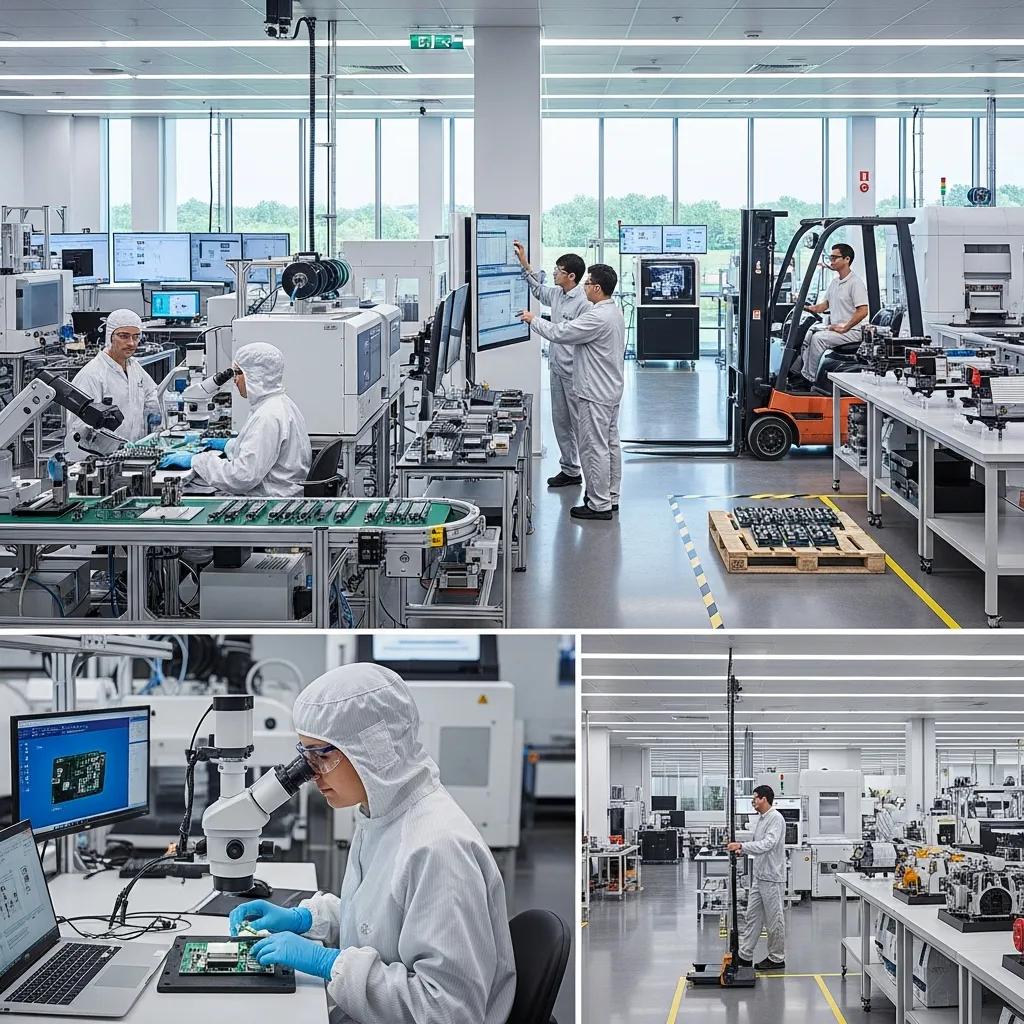
Pilot Production and Low-Volume Manufacturing
Comprehensive Guide to Pilot Production and Low-Volume Manufacturing with Custom Manufacturing Services

Pilot production and low-volume manufacturing are foundational steps for companies turning new ideas into real products. This guide breaks down what pilot runs look like, how they differ from low-volume production, and which custom manufacturing services support each stage. You’ll find clear explanations of the benefits, the technologies commonly used, and practical approaches to quality control in small-batch settings. As teams work to reduce risk and control costs while staying flexible, a solid grasp of these concepts becomes essential. We’ll also cover materials, real-world examples, and answers to the questions businesses ask most often about these strategies.
What is Pilot Production and How Does It Differ from Low-Volume Manufacturing?
Pilot production is the early manufacturing stage where a limited batch is made to validate a design and production process before committing to larger runs. It’s where you uncover issues and refine workflows. Low-volume manufacturing, by contrast, produces smaller quantities over a longer term to meet niche demand or customized orders. The main distinction is purpose: pilot production is about testing and validation; low-volume manufacturing is about flexibility and tailored output.
Defining Pilot Production and Its Role in Manufacturing Processes
Pilot production sits between development and mass manufacturing. It gives companies a chance to test assembly steps, validate materials and tooling, and collect user feedback without the expense of full-scale production. Producing a controlled, limited run lets teams iterate quickly, reduce launch risk, and confirm the final product meets performance and quality expectations.
This approach follows modern, iterative development practices that reduce technical and commercial risk.
Lean Framework for De-Risking Pilot Production
It reframes technology development from a single, high-risk effort into a series of agile, iterative steps that lower risk and make new technologies easier to fund and commercialize.
The Minimum Viable Pilot Plant (MVPP): A Lean Framework for De‐
Risking Chemical Process Technologies, P Oladipupo, 2025
Key Differences Between Low-Volume and Mass Production
Low-volume and mass production serve different business needs. Low-volume runs produce fewer units, enabling design flexibility and customization at the cost of higher per-unit prices. Mass production prioritizes output and unit-cost efficiency by leveraging scale and repeatable processes. Knowing these trade-offs helps businesses choose the right manufacturing path for product goals, timelines, and budgets.
The adaptability of low-volume production underpins mass-customization strategies that meet individual customer needs.
Mass Customization for Unique Product Needs
Mass customization aims to meet individual customer requirements by combining flexible manufacturing technologies—like agile and computer-integrated systems—with design-to-order workflows. The result is production that translates a customer’s specific needs into a tailored product.
Mass customization and manufacturing, SV Kamarthi, 2000
Which Custom Manufacturing Services Support Small Batch and Prototype Fabrication?
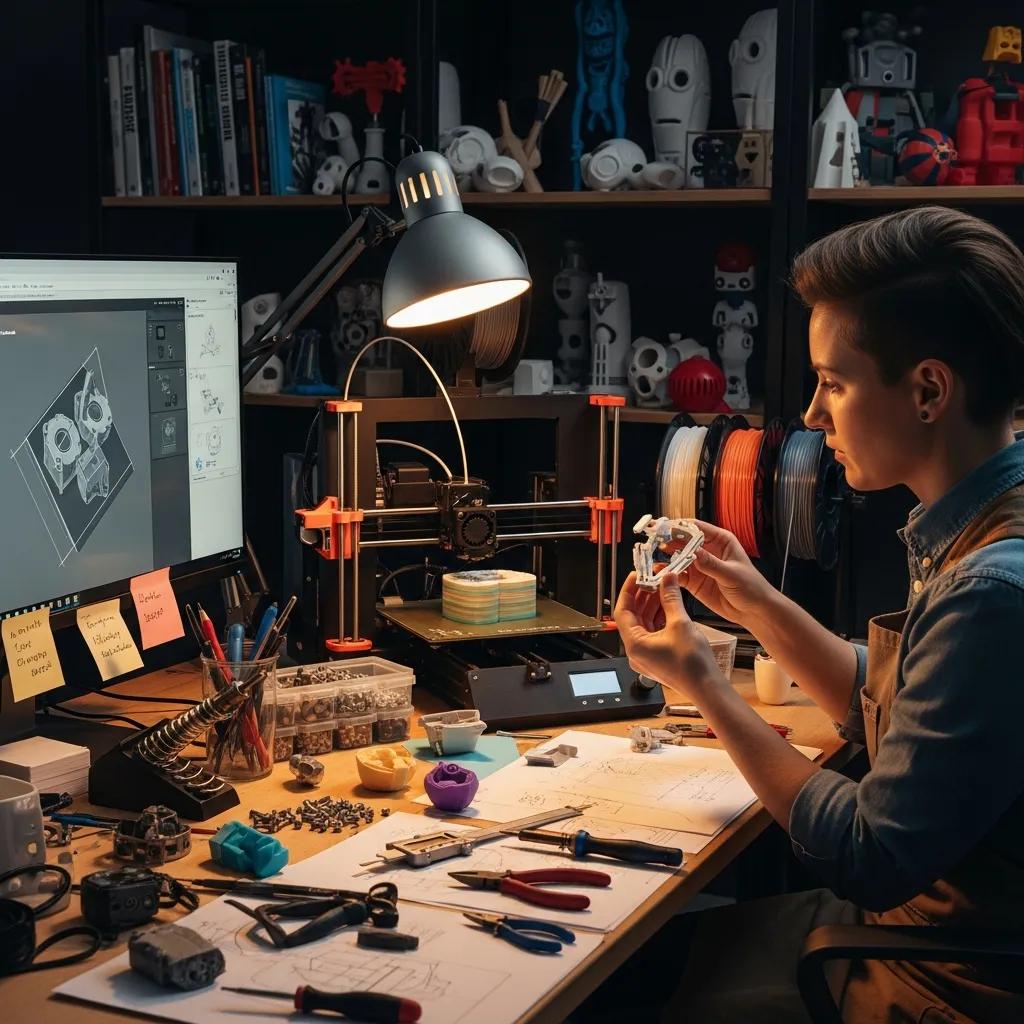
Custom manufacturing services give teams the tools and expertise to produce prototypes and short runs that match precise design and quality requirements. These providers offer tailored solutions so companies can move from concept to verified product without unnecessary delay or expense.
Overview of Prototype Fabrication Techniques and Rapid Prototyping Methods
Common prototype techniques include additive manufacturing (3D printing), CNC machining, and short-run injection molding. Rapid prototyping—especially 3D printing—lets designers iterate quickly, test fit and function, and refine parts before committing to tooling. These methods accelerate development while keeping costs controlled and quality measurable.
How 3D Printing Manufacturing Enhances Small Batch Production Services
3D printing has changed how small batches are made by removing much of the tooling overhead and enabling complex geometries on demand. That means faster iterations, shorter lead times, and the ability to customize individual parts without major setup costs. For many projects, additive manufacturing reduces expense and improves time-to-market while supporting scalable, repeatable production where needed.
3D printing's practical benefits include cost reductions in tooling and faster paths to scale for precision parts.
3D Printing for Cost-Effective, Scalable Production
Additive manufacturing is reshaping production with cost-effective, scalable, and precise fabrication methods. Recent research highlights its impact across aerospace, medical, automotive, and pharmaceutical sectors: 56.3% of surveyed respondents report lower production costs from 3D printing, with tooling savings of 80–90% and significant reductions in inventory costs. The study also notes that 59.4% see improved scalability—producing up to 100,000 units per year with high accuracy and faster scale-up versus traditional approaches.
… MANUFACTURING BREAKTHROUGHS LEVERAGING 3D PRINTING FOR COST-EFFECTIVE SCALABLE PRECISE PRODUCTION PROCESSES IN MODERN …, K Zvarikova, 2025
What Materials and Technologies Are Used in Low-Volume Manufacturing?
Low-volume manufacturing draws on a wide range of materials and production methods so teams can match performance, cost, and lead-time requirements. Choosing the right combination of material and process is central to a successful small-batch strategy.
Common Material Types for Pilot Production and Prototype Fabrication
Plastics, metals, and composites are typical choices for prototypes and pilot runs. Plastics are lightweight and cost-effective for many non-structural parts; metals provide strength and durability where required; composites offer tailored performance for weight-sensitive or high-strength applications. Understanding each material’s properties helps you pick the best fit for function, testing, and eventual production.
Additive Manufacturing and CNC Machining in Small Batch Production
Additive manufacturing excels at complex geometries and minimal waste, making it ideal for rapid iteration and bespoke components. CNC machining delivers high precision and repeatability for parts with tight tolerances. Both technologies are complementary and widely used together in low-volume programs to balance speed, cost, and quality.
| Technology | Description | Application |
|---|---|---|
| Additive Manufacturing | Parts built layer by layer from digital files | Prototyping, complex or customized geometries |
| CNC Machining | Computer-controlled cutting and finishing of solid stock | Precision components with tight tolerances |
| Injection Molding | Material injected into a mold to form consistent parts | Repeatable production with uniform quality |
The table summarizes how each technology addresses different needs in low-volume manufacturing—from one-off prototypes to small production runs requiring consistent quality.
How Is Quality Control Managed and Production Scaled in Low-Volume Manufacturing?

Quality control in small-batch manufacturing ensures products meet specs without the buffer of large-scale sampling. A strong QA program prevents costly rework and maintains customer confidence.
Quality Assurance Processes for Custom Manufacturing Services
Quality assurance for custom manufacturing typically combines incoming material checks, in-process dimensional inspections, and final functional testing. Automated inspection tools and digital records help improve accuracy and traceability. Early inspection and feedback loops let teams catch issues fast and maintain consistent quality across batches.
Strategies for Scalability in Small Batch and Pilot Production
Scaling small-batch production requires planning for modular workflows, flexible equipment, and responsive supply chains. Additive manufacturing enables rapid adjustments; modular tooling and standardized processes make scale-up smoother. Investing in versatile equipment and process documentation helps teams increase output without compromising quality or lead times.
What Are Real-World Examples and Success Stories in Pilot Production?
Case studies from multiple industries show how pilot production accelerates learning and reduces risk. Examining those examples helps teams apply proven tactics to their own product programs.
Case Studies Demonstrating Effective Prototype Fabrication
Many companies have used pilot production successfully. For example, a tech startup used rapid prototyping to iterate a wearable device, gathering user feedback and refining the design before committing to larger production. That iterative path not only saved development time but also ensured the final product met customer expectations.
Client Testimonials Highlighting Custom Manufacturing Solutions
Client stories often highlight real benefits: faster development cycles, lower development costs, and better product-market fit. These testimonials underscore the value of working with manufacturing partners who can align services to specific technical and business needs.
What Common Questions Do Businesses Have About Pilot Production and Low-Volume Manufacturing?
Companies frequently ask about lead times, material choices, and how to pick the right manufacturing partner for short runs and pilot programs.
Typical Lead Times and Choosing the Right Manufacturing Partner
Lead times depend on project complexity, materials, and the partner’s capacity. Small pilots can take a few weeks; more complex prototypes or regulated components may take several months. When choosing a partner, evaluate their technical experience, process documentation, on-time performance, and responsiveness—the right fit reduces surprises and keeps timelines predictable.
Materials Selection and Cost Considerations for Small Batch Runs
Material choice affects cost, performance, and manufacturability. High-performance materials can raise unit cost but may be required for functional testing or end-use validation. For early pilots, consider lower-cost substitutes that replicate key properties, then switch to production-grade materials as you validate the design. Balancing cost and fidelity helps manage budgets without compromising learning.
To further explore the possibilities, consider custom manufacturing services for your next project.
For businesses seeking to expand their reach, understanding areas we serve can be a game-changer.
When considering prototype fabrication, remember that precision and speed are key.
Frequently Asked Questions
What are the benefits of using pilot production in manufacturing?
Pilot production reduces risk, controls costs, and improves product quality. By making a small batch, teams can find design issues, verify manufacturing steps, and collect user feedback before full-scale production. This iterative approach strengthens reliability and can speed time-to-market.
How can businesses effectively manage quality control in low-volume manufacturing?
Effective quality control relies on inspection at multiple stages: incoming materials, in-process checks, and final testing. Automated measurement tools and clear work instructions improve consistency. Training staff and documenting processes ensures quality is repeatable across batches.
What role does technology play in enhancing pilot production processes?
Technology enables faster iteration and higher precision. 3D printing and CNC machining shorten prototype cycles; simulation and CAD tools help spot issues before physical parts are made. Together, these tools reduce cost and accelerate development.
What are the common challenges faced during low-volume manufacturing?
Challenges include higher per-unit costs, supply-chain complexity, and maintaining consistent quality across small runs. Managing inventory and sourcing materials for niche volumes can be harder than for mass production. Mitigation strategies include strong supplier relationships, flexible processes, and careful demand forecasting.
How does low-volume manufacturing support sustainability initiatives?
Low-volume manufacturing reduces waste by producing closer to demand and encourages efficient material use—especially when using additive methods that minimize scrap. It also supports experimenting with eco-friendly materials and processes, helping companies meet sustainability goals while limiting excess inventory.
What factors should businesses consider when choosing a custom manufacturing partner?
Look for experience in your industry, proven technical capabilities, and flexibility to scale. Check references for on-time delivery and quality performance. Clear communication, transparent processes, and a commitment to quality assurance and sustainability are also important for long-term partnerships.
Conclusion
Pilot production and low-volume manufacturing let teams innovate with lower risk and greater flexibility. These approaches improve product quality, speed learning, and offer tailored solutions when full-scale production isn’t the right first step. By combining the right materials, technologies, and quality practices, companies can move from idea to market more efficiently. To learn how custom manufacturing services can support your next project, visit our website.
